The skilled trades are not standing still.
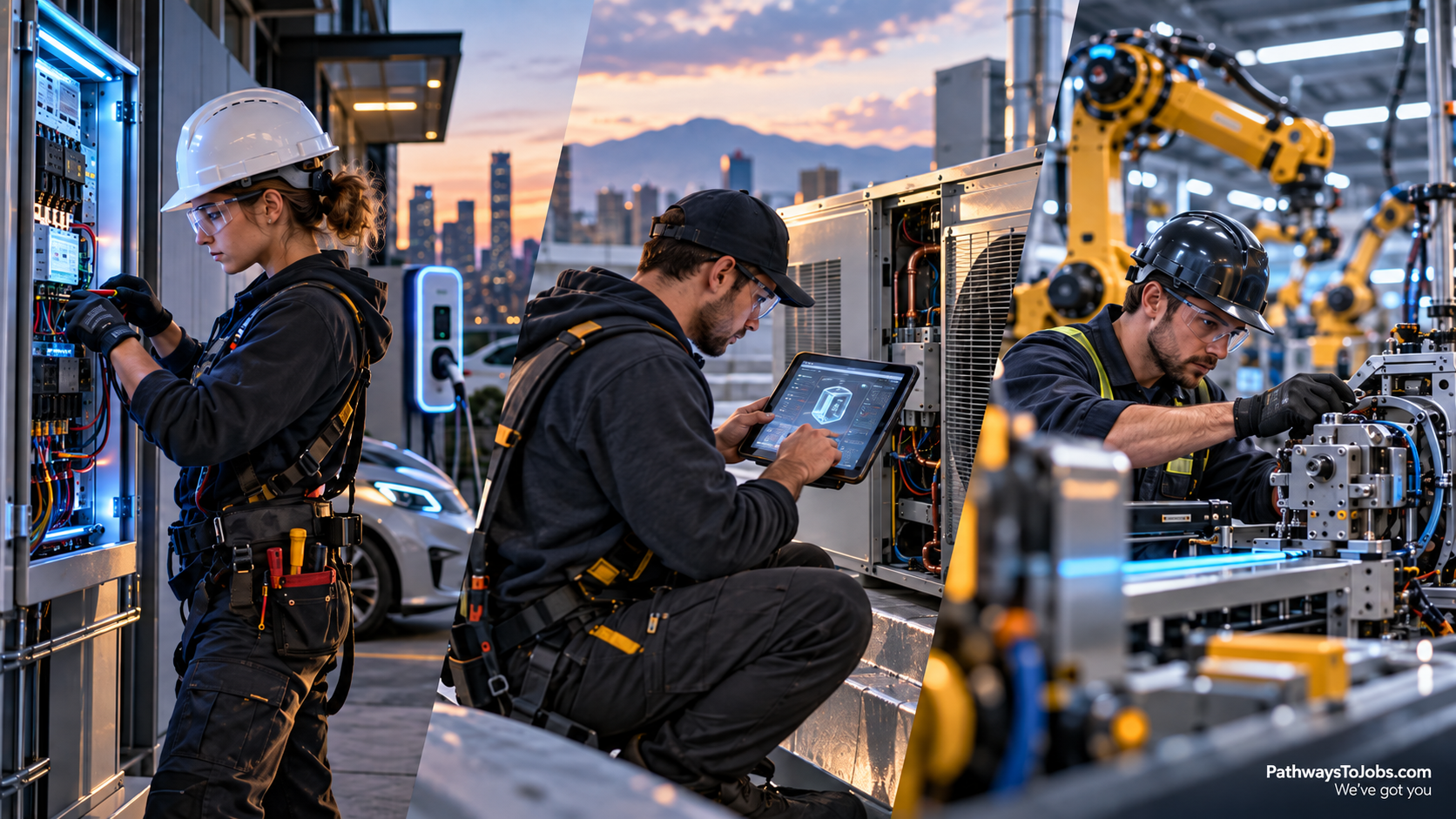
The skilled trades are not standing still. AI, automation, smart buildings, electric vehicles, and advanced machinery are changing how work gets done, but they are also creating new opportunities for people who know how to install, maintain, and repair the technology behind them.
Around the world, construction and other frontline careers are expected to remain major sources of job growth. At the same time, employers say technology is changing the skills workers will need.
Here are three trades where that change is already clear.
Electrician
Electricians used to be associated mainly with wiring homes and buildings. That is still part of the job, but the electrical world is getting much bigger.
Today’s electricians can work with smart building systems, automated controls, solar energy, battery storage, EV charging equipment, and increasingly sophisticated electrical networks. These systems still need someone to install them, test them, troubleshoot problems, and keep them operating safely.
Demand reflects that need. In the United States alone, employment for electricians is projected to grow 9% between 2025 and 2035, with about 72,700 openings each year.
AI may help diagnose a problem or monitor a system, but someone still has to understand what is happening behind the wall and know how to fix it.
HVAC Technician
Heating and cooling is becoming a technology career too.
Modern HVAC technicians increasingly work with computerized climate controls, sensors, energy-management systems, heat pumps, and connected equipment that can monitor its own performance. Smart systems can identify unusual readings before equipment completely fails, giving technicians more information to work with.
The technician’s role is shifting from simply repairing mechanical equipment to understanding how mechanical, electrical, and digital systems work together.
That is one reason demand remains strong. U.S. employment for HVAC technicians is projected to grow 11% from 2025 to 2035, with about 40,600 openings a year. Growth is being driven partly by new construction, data centres and increasingly sophisticated climate-control systems.
Industrial Machinery Mechanic
Walk into a modern factory, and you may see robots, automated production lines, sensors and machines communicating with computer systems.
Someone still has to keep all of it running.
Industrial machinery mechanics diagnose problems, repair equipment, and maintain increasingly automated machinery. Predictive-maintenance systems can now use sensors and data to warn that a machine may be developing a problem before it stops working. Instead of replacing the mechanic, that technology can give skilled workers better information about where to look and what needs attention.
This is one of the strongest examples of automation actually supporting demand for a trade. The U.S. Bureau of Labor Statistics says continued adoption of automated manufacturing machinery is expected to create jobs for workers who maintain it. Employment for industrial machinery mechanics, maintenance workers and millwrights is projected to grow 14% from 2025 to 2035, with about 51,900 openings each year across the group.
The Trade Worker of the Future
The toolbox is changing.
There will still be wrenches, meters, wiring and machinery. But there will also be diagnostic software, sensors, automated systems and AI-powered tools.
For someone considering the trades today, that creates a different kind of opportunity: learn how things work with your hands and understand the technology behind them.
Check out Heavy Duty Mechanic ( and other trade-related careers )
https://pathwaystojobs.com/career/526/Heavy_Duty_Equipment_Mechanic
PathwaysToJobs.com
We've got you :)